


Mehrgarh: The First Village in South Asia
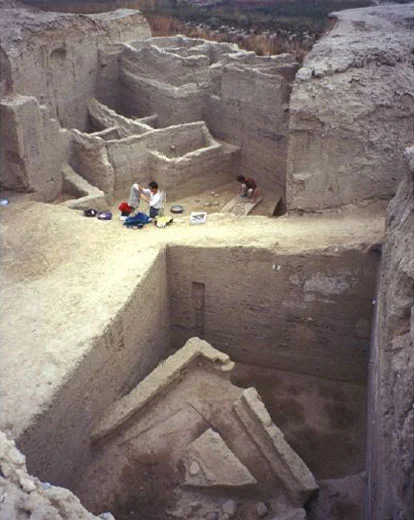
Mehrgarh is a vital ancient site in Pakistan dating back to 7000 to 2600 BCE. It is located in Balochistan near the Bolan River in district Kacchi-Bolan, Balochistan. This is the place where village life started in South Asia more than 9,000 years ago. People here were the first to begin farming and animal herding in this region. They decided to stop moving from place to place i.e. hunting and gathering and built permanent houses using mud bricks. However, hunting was still a part of their routine in the early Mehrgarh. This big change marked the beginning of settled life in South Asia.
The people of Mehrgarh were skilled and creative. They made excellent tools from stone and bone for their daily use. They created beautiful jewelry using materials that came from faraway places like Afghanistan and Iran through trade networks and barter system. This shows they had connections with other cultures even in ancient times. The earlier inhabitants buried their dead with objects i.e. jewelry, pots, stone tools, etc. which showed a concept of life after death. However, later inhabitants buried them mostly without any objects.
Mehrgarh is special because it shows several important firsts in human history. The people here were the first to grow cotton in the world. They also practiced one of the earliest forms of dentistry in the world. Scholars have found evidence of drilled teeth that are 9,000 years old. This tells us they cared about health and helping each other.
Daily Life and Developments
Life in Mehrgarh continued for thousands of years. Generation after generation lived here and improved their way of life. They developed new technologies that made their work easier. One important invention was the potter’s wheel in Copper Age, which helped them make better pottery more efficiently. They also started working with copper and later bronze, which were big steps in technology.
They built strong houses that had multiple rooms in New Stone Age. The people stored their food in special rooms and made bread from their grains. As time passed, their skills in crafts and building kept improving. They made better pottery with beautiful designs and continued to create fine jewelry.
The community at Mehrgarh kept growing and developing for over 4,000 years. The culture that began here did not disappear but continued to evolve. What started as a small village slowly grew into a more complex society. The foundations laid here would later help in the development of the great Indus Valley Civilization.

Rediscovery and Protecting Our Heritage
French Archaeological Mission led by… discovered Mehrgarh in 1973 and began excavations in the later years. Their work continued for 14 seasons at Mehrgarh revealing an impressive development of culture. However, their work had to be stopped before they could finish. Today, most of Mehrgarh (about 95%) still remains unexcavated. There are many secrets still buried underground waiting to be discovered.
The site faces challenges from nature. The mighty Bolan River, which once helped the village thrive, now erodes the ancient mounds because of its change of course. Conservation work is needed to protect what remains of this important historical site. However, a protective dam was once built but it could not stand the fast flow of flash floods.
In a significant achievement, the Government of Balochistan brought back the artifacts that were kept in Sindh province. More than 17,000 objects are now safely kept in the Mehrgarh Museum in Quetta. This allows people to see and learn about our ancient history.
When you visit Mehrgarh, you walk where our ancestors built the first communities. This site reminds us that Balochistan was a center of ancient innovation. Protecting Mehrgarh is our responsibility. We must preserve this heritage for our future generations. This is where our story began, and it is something we should all take pride in.